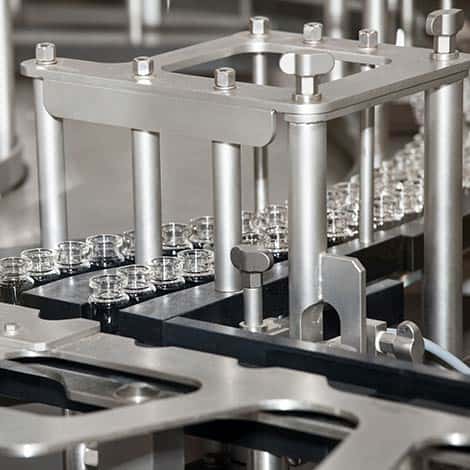
Choosing the right monitoring technique is very important in the control of clean space contamination. This special environment requires strict standards to ensure product integrity and safety. After all, they are responsible for some of the most critical applications for cleanliness on earth, from pharmaceutical manufacturing facilities to semiconductor fabrication factory.
To minimize the risk of contamination and provide the highest level of cleanliness, strict regulatory standards are implemented for monitoring clean space. This regulation helps provide more control over their environment. Examples of this standard include ISO 14644-1: 2015 and Appendix to European European Manufacturing Practices (EU GMP) 1.
The principles set by ISO 14644-1: 2015 and EU GMP Annex 1 Stand as an important benchmark for cleanroom monitoring. They offer a comprehensive framework for managing air molecular contamination, important factors in maintaining the integrity of the pharmaceutical manufacturing process.
ISO 14644-1: 2015 offers a systematic approach to measuring and controlling air particulates in a clean room. Basically, it works by analyzing a number of air volumes to understand the number of particle concentrations. These particles will determine the overall classification of air cleanliness. In the end, this standard plays a role in establishing an acceptable limit for the number of particles, affecting the design, operation, and monitoring of the clean room environment.
I am GMP Appendix 1 Add this guideline by setting requirements for making medicinal products. It focuses on the importance of microbiological control in relation to particle standards.
Together, these documents form a series of cohesive guidelines that encourage the implementation of effective contamination control strategies in pharmaceutical clean spaces. Comply with the principles described in ISO 14644-1: 2015 and GRMP EU Appendix 1 can achieve optimal net space performance. That way, pharmaceutical producers can ensure that their clean space can meet strict demands for safety and product quality.
If you are interested in learning how to apply limits in cleanroom monitoring, we invite you to read. Our article will consider the nuance of cleanroom classification, with a focus on the importance of control contamination in the air as verified through the standards mentioned above.
We will see this standard in more detail, checking their criteria, implementation challenges, and impacts on pharmaceutical manufacturing. That way we can explain the role of standardized cleanroom practices in upholding product integrity and patient safety.
The length of the maximum tube allowed
The physical arrangement of monitoring equipment is very important for the accuracy and reliability of the calculation of particles in the clean space. According to ISO 14644-1, the length of the tube connecting the count to the probe must be no more than 1 meter. However, some recommendations extend this limit to 2 meters.
This provision aims to minimize the loss of particles during transportation. This ensures that the number of particles accurately reflects the state of the clean space environment. Therefore, the choice of the length of the tube must achieve a balance between:
- Operational flexibility
- The need for precision in particle detection.
Concentration and duration of microbial monitoring
Microbial monitoring is an integral part of assessing the cleanliness of the biological space of clean space. EU GMP Annex 1 offers a comprehensive guide about maximum concentration to monitor microbial activity. It also recommends the appropriate monitoring frequency and duration based on the level of risk assessed.
This guideline functions as a benchmark to determine the acceptable microbial load. They allow facilities to implement effective and efficient monitoring schedules in identifying potential contamination events.
Warning limits and actions
Appropriate settings Warning limits and actions For the results of particulate and microbiological monitoring it is very important to maintain environmental control and ensure process stability.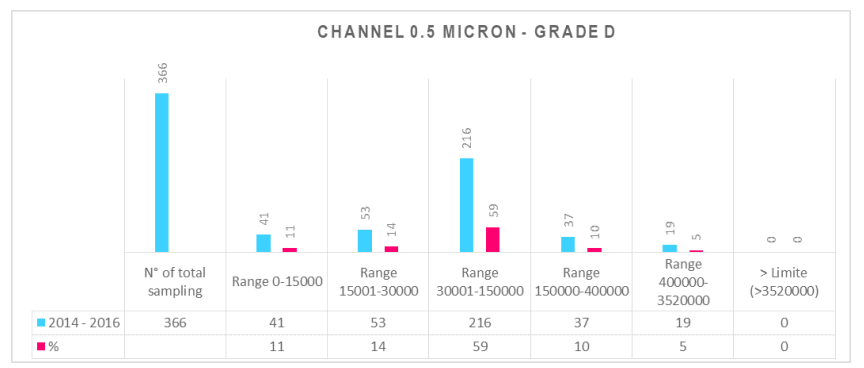
The warning limit indicates deviations from normal operating conditions, encouraging review and increasing monitoring to prevent escalation. The limit of action, on the other hand, shows significant deviations, requires direct corrective action.
This threshold is very important in managing a clean space environment proactively, allows timely interventions to reduce the risk of contamination.
Particle count selection
Selection particle count regulated by the need to meet the classification of ISO cleanroom. This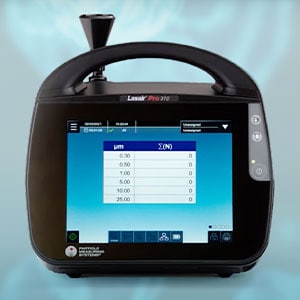 where the maximum concentration capacity of the calculating must exceed the specified ISO limit.
Factors that influence the choice of particle counters include:
- Cleanroom environment
- The desired flow rate
- Attractive specific particle size.
In the end, alignment of particle calculating specifications with clean space requirements ensures the accuracy and relevance of monitoring data. This can facilitate effective contamination control.
Understand ISO standards
ISO 14644-2: 2015 reduces guidelines for cleanroom monitoring. It focuses on establishing the regulation of correct particle contamination alarm and warning limits based on data trends.
This standard provides a framework for sustainable monitoring, allows facilities to detect and overcome immediate deviations. Cleanrooms meet the ISO standards can maintain the level of cleanliness needed to ensure that the products or research produced in this environment meets the highest quality and security standards.
Applying appropriate boundaries and guidelines in monitoring clean space is a critical effort that supports the effectiveness of contamination control strategies. By complying with established standards, setting appropriate warning limits and actions, and selecting appropriate monitoring equipment, cleanroom operations can achieve double goals compliance with regulations and guarantees of product integrity.
The comprehensive approach to monitoring clean space not only protects controlled environment but also strengthens commitment to excellence in manufacturing and research practices.
Are you looking for particle counters in the air to monitor clean rooms?
The purpose of utilizing the boundary for monitoring clean space is to avoid environmental contamination through pollutants. These limits set standards for clean space to maintain their quality not compromised. In addition, the limits can also show what changes need to be made to keep the room clean.
By working together -Same, ISO 14644-2: 2015 And I am GMP Appendix 1 Offers a way to maintain a clean space condition, and thus, the creation of sterile products used in the medical industry. Medical products cannot be compromised during the production process. Therefore, it is important to use limits to set limits around the monitoring of these goods to ensure its quality.
Clean rooms need to be arranged to ensure that they remain at the optimal level of cleanliness. This includes its temperature and humidity and the level of particles in its space.
You will need an environmental monitoring solution to observe particles that can cause the contamination of air molecules (AMC). Are you interested in AMC monitoring devices or just want to observe the level of particles, search for us particle counters in the air As a starting point!
Bring your clean space monitoring to the next level through our particle calculation tool. You can rely on the quality of our products to make sure you can get the data you need. That way your clean air will always be the best.
Contact us today to learn more about the cleanroom monitoring system.
News
Berita
News Flash
Blog
Technology
Sports
Sport
Football
Tips
Finance
Berita Terkini
Berita Terbaru
Berita Kekinian
News
Berita Terkini
Olahraga
Pasang Internet Myrepublic
Jasa Import China
Jasa Import Door to Door
Originally posted 2025-09-18 06:21:54.